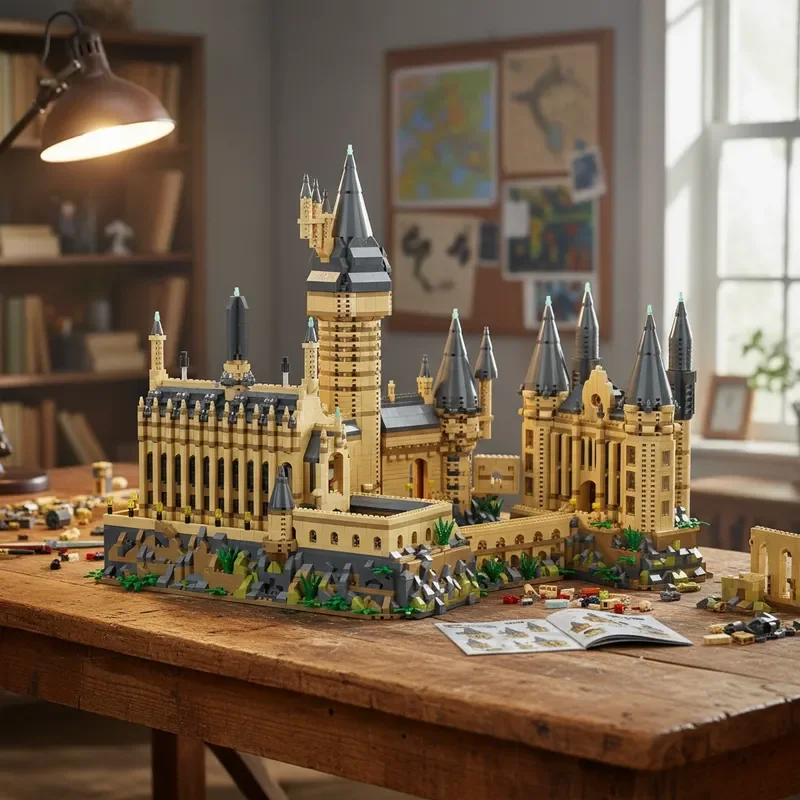
In an age of endless digital content, parents and educators face a critical question: should children spend their time scrolling through screens or engaging with physical toys? The answer, supported by child development research, increasingly points toward hands-on educational toys as the superior choice for developing young minds.
Active Engagement vs. Passive Consumption
When children play with building blocks and construction bricks, they're actively making decisions, solving problems, and creating outcomes. They choose how to build, what to construct, and how to overcome structural challenges. Passive screens, by contrast, deliver pre-made content without requiring creative input. This fundamental difference in engagement levels shapes how children's brains develop and strengthen critical thinking skills.
Development of Fine and Gross Motor Skills
Manipulating building blocks develops hand-eye coordination, finger dexterity, and spatial awareness. Children learn through tactile feedback—how pieces fit together, weight distribution, and balance. Screen time offers none of these physical benefits, leaving children's motor development lagging behind their digitally-distracted peers.
STEM Learning Through Play
Construction toys naturally teach engineering, mathematics, and physics concepts. When children build a tower and it topples, they learn about balance and gravity. When they follow instructions to create a complex model, they practice patience and sequential thinking. Educational toys make STEM concepts concrete and memorable, rather than abstract video content that children passively watch and forget.
Fostering Creativity and Imagination
A set of building blocks is an open-ended toy with infinite possibilities. Children invent their own projects, tell stories with their creations, and explore their imagination without digital constraints. Screen content typically presents finished ideas with limited room for creative interpretation.
Social and Emotional Development
When children build together, they collaborate, negotiate, and learn compromise. They celebrate successes and troubleshoot failures as a team. Passive screen time isolates children and misses these crucial social development opportunities.
Better Sleep and Mental Health
Research shows excessive screen time correlates with sleep disruption and increased anxiety in children. The blue light, rapid visual stimulation, and often stimulating content can overstimulate young nervous systems. Physical play with educational toys promotes healthier sleep patterns and more stable emotional regulation.
The Balance Approach
This isn't an argument for eliminating screens entirely—some high-quality educational content has value. Rather, it's a reminder that hands-on educational toys should form the foundation of children's play. When parents invest in building blocks, construction sets, and STEM-focused toys, they're investing in their children's cognitive, physical, and emotional development in ways screens simply cannot replicate.
The next time you're choosing between a new app subscription and a quality building set, remember: engaged, creative, active play builds brains. Passive screens do not.